
NFR23
Biggest project to date. I was in charge of all of the low voltage systems in the car, consisting of 15 different projects. I personally worked on making the system architecture, deciding where all the board would be, the electrical harness, connecting all the systems together, and the PCB layout of the power distribution module (PDM), in charge of powering all the microcontrollers, cooling fans, and pumps. I lead over 20 people on projects ranging from simple freshmen ones to teach them the basics of EE and integrating sensors, to projects requiring multiple teams input, such as cooling and the inverter.
FOC IC
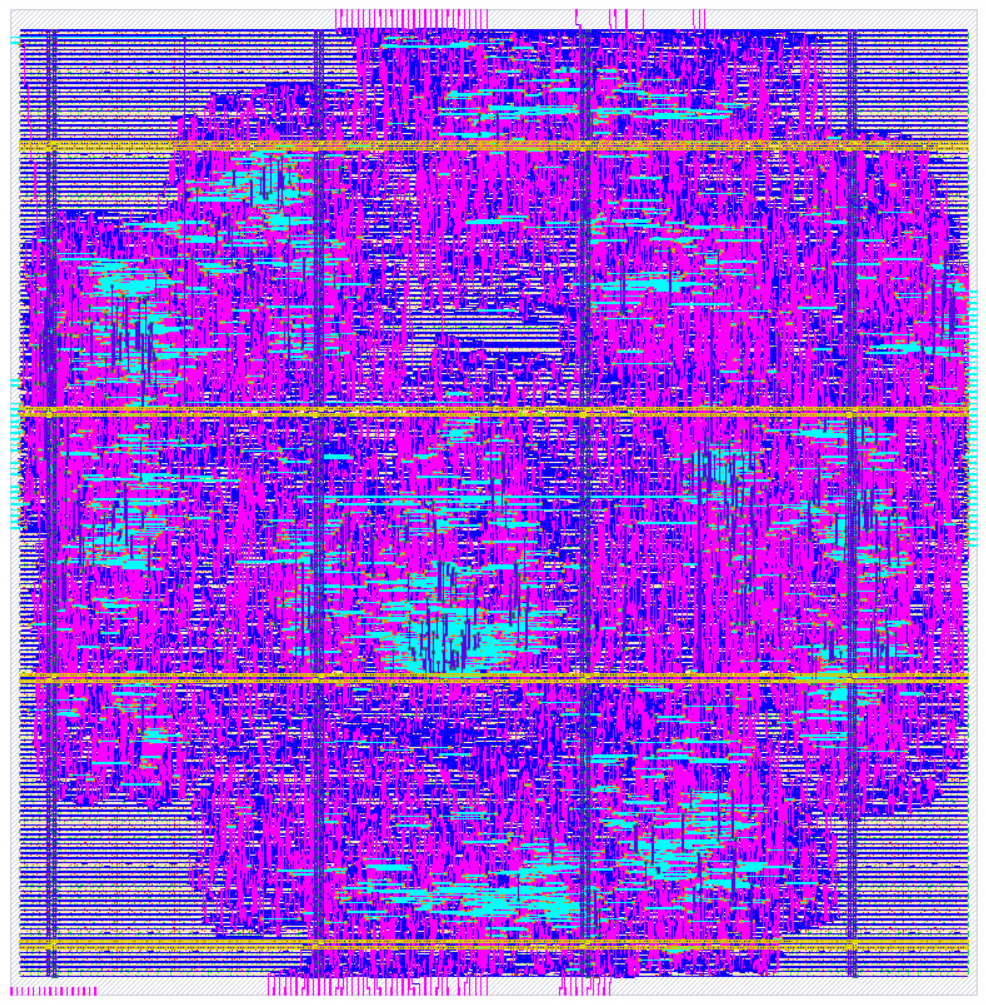
Current FOC Solutions are not beginner friendly, requiring not only an understanding of the software but also the hardware. Our intent is to make an IC that not only accelerated the speed of calculation in FOC, but also make it easy to implement in any project. Provided with the motor angle, and the current of 2 of the phases to a brushless motor, this FOC chip can calculate the PWM needed to properly drive the motor. The chip is first being prototyped into an FPGA with a companion PCB to provide the FPGA through SPI all the needed inputs. This chip is being taped-out through skywater 130nm technology, through Openlane tools.
Ray Tracing FPGA
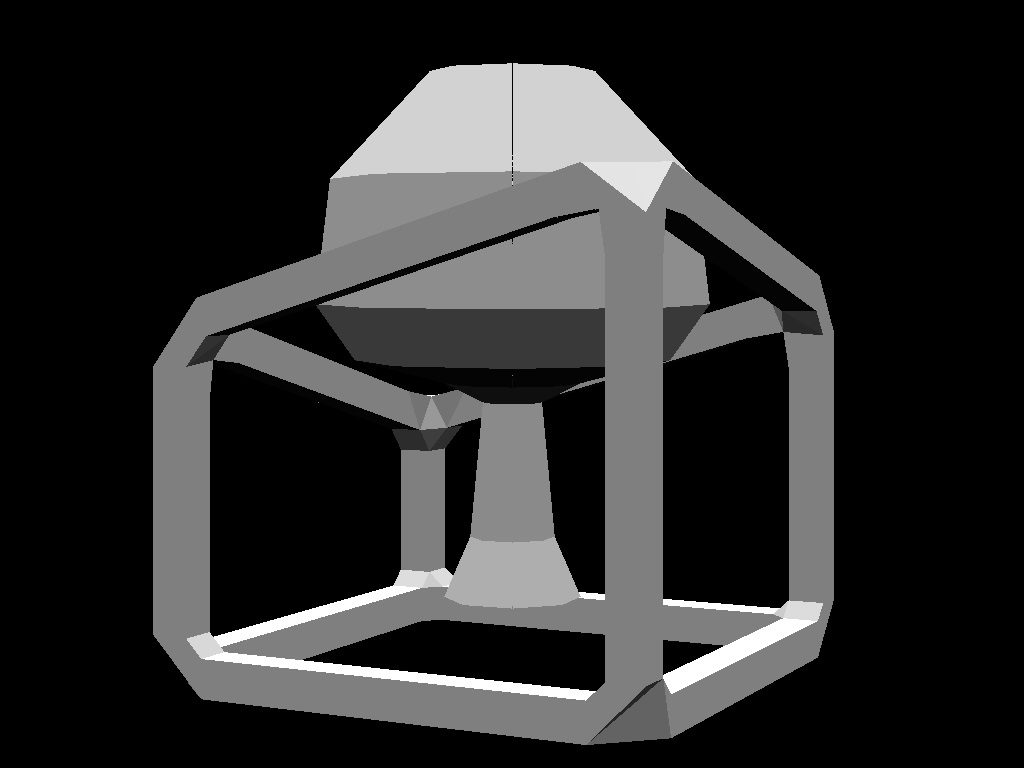
Design for COMP_ENG 392: VLSI System Design Projects. We decided to try to implement Ray Tracing on an FPGA after finding a simple C algorithm for it. It can be split into 3 modules, one for checking at what point each ray hits an object plane, one to check whether that point is within a polygon, one to save the points and polygons to only display the closest polygon. We decided to implement a streaming architecture due to the large amount of data needed to calculate a frame. Comparing with the C algorithm, we were able to synthesize our project correctly after some changes to the FIFOs. The synthesis tool would not identify them as FIFOs so all we had to do was change them for the given IPs.
Power Inverter
Designed for Northwestern Formula Racing to drive an AC Motor. The system consists of inverting 600V DC to three phase AC. This is accomplished by the integration of multiple boards to interface with each other and IGBTs.

Chester
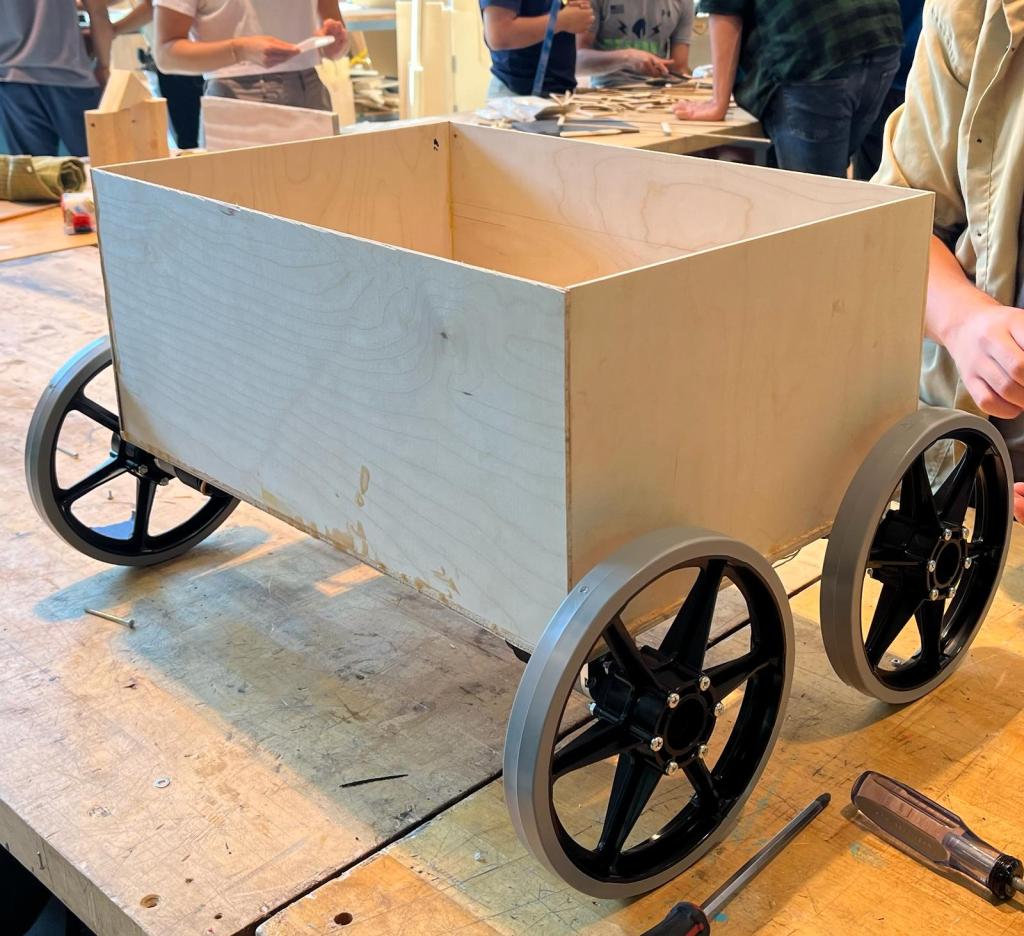
Design for COMP_ENG 347: Microprocessor Systems Project. The goal of this project was to make a robot box capable of carrying objects and following its user. Using ultra-wideband (UWB), Chester would be able to follow its user by pairing their phone or holding a little device with an UWB module in it by calculating the distance between the 2 UWB sensors in Chester to the one from the user. A rough custom 5s1p battery was made for it with 21700 cells. This was paired with an OTS BMS to make sure the battery could be charged and discharged correctly. The battery cells were chosen as Chester moves from 4 Brushed DC motors. Additionally we figured out ultrasonic sensors to override Chester’s following in the case someone steps in front of it, and weight sensors, to signal whether too much weight was put on, but we ran out of time and were unable to integrate everything. Everything was controlled by an ESP32 using RTOS.
4-bit Adder
Designed for COMP_ENG 391: CMOS VLSI Circuit Design. The goal was to design schematics and layouts of a 4-bit adder from scratch, only having transistors as the main building blocks. The span of this assignment was only 1.5 weeks, therefore a ripple-carry adder was chosen for its simplicity. The design was made in Cadence Virtuoso.


Dum-E Automated Sentry
Open Platform automated sentry based on ESP32s. Utilizing motors, RTOS, MCUs, image processing, and server functions to identify and track a target. Worked on a team of 3 electrical engineering students and was personally responsible of all hardware development including prototyping breadboard and PCBs, hardware architecture, and wiring harness.
Electronics Shifting Board

Designed for NFR for the 20′-21′ season. Compared to the previous year, the size (without excluding connectors) was reduced by 13%, while increasing board complexity and maintaining most component footprints. Testing with power supplies and multimeters was conducted to ensure reliability. A toggleable failsafe was implemented to allow the board to function were the Arduino driving the logic were to fail. Extra leftover connector pins were accounted for and can be utilized in the future for I/Os.
The shifting board was utilized to pull three different pneumatic solenoids to acts as shifting down, shifting up, and ignition cutting.
 Jurgen Tisza